Where Did All the Frogs Come From?

It was quite a surprise!

Frog spawn has mysteriously appeared every year since work finished on the Glen Esk Pocket Park in the Calderwood Area of East Kilbride.
There were no sightings of frogs initially.
Then, last year, a couple of posts appeared on social media highlighting the rescue of a frog on a road or a path.
Meanwhile, those interested monitored the progress as the tadpoles appeared.
However, nobody saw the tadpoles develop into frogs, and last year, there was concern that as summer approached, the ponds seemed to dry out.
The fear was that the tadpoles had not survived.
It could only be a matter of time before there would be no frogs.
Well, thankfully not.
This year, the frogs spent a few days in the ponds, allowing people of all ages to see and photograph them.

There were not just a few frogs, there were loads.
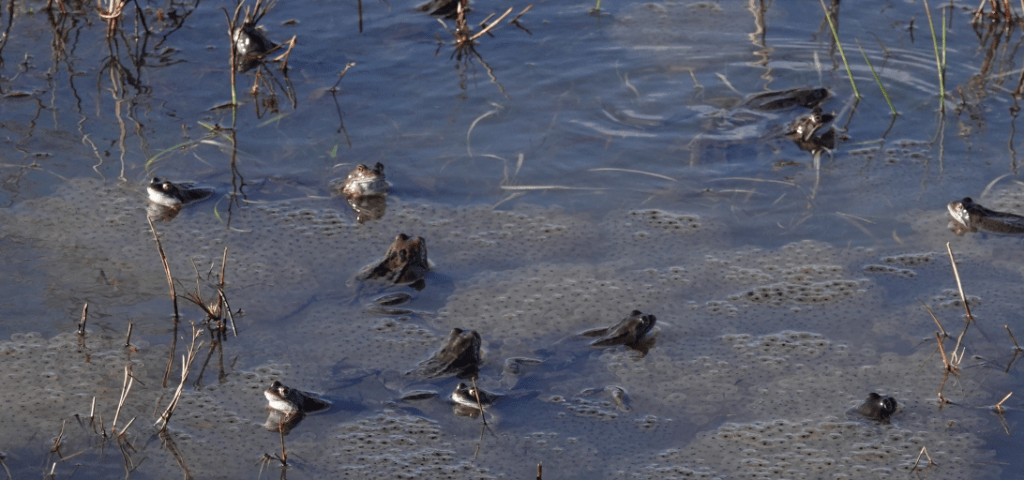
Quite how they managed to survive is a bit of a mystery.

Also, why this year they have decided to hang about letting the local community see and photograph them for a few days when in previous years they appeared to be quite secretive is also a bit of a mystery.

I am glad they did as a lot of people particularly children got a lot of pleasure from seeing them.

So fingers crossed, the ponds don’t dry out and we see lots of froglets.
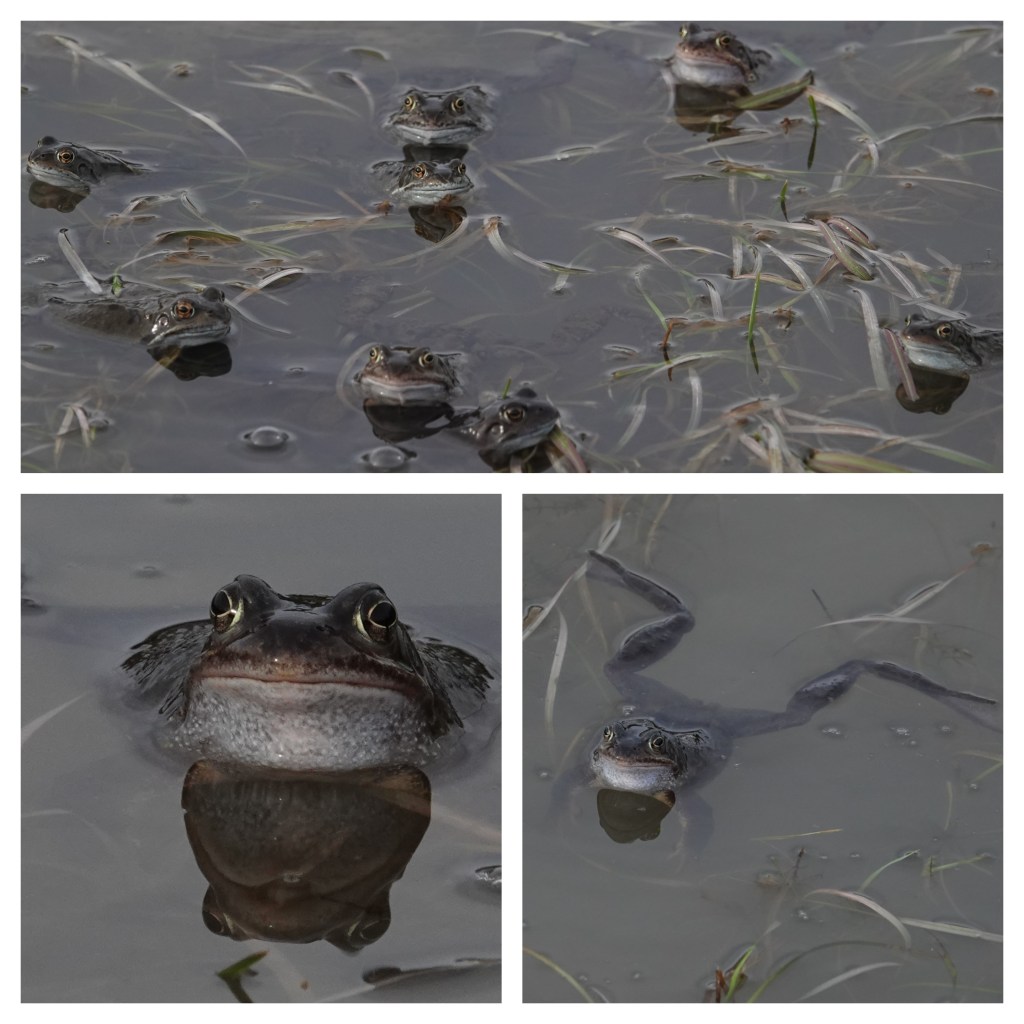
A collage of 3 pictures showing a close up of a frog, a frog swimming and a crowd of frogs

Snowdrops Brightening up a gloomy February Walk

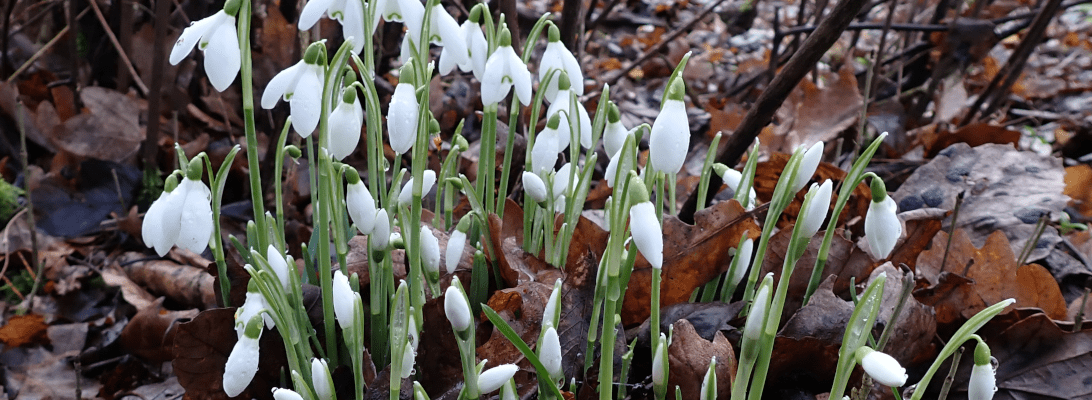
a clump of snowdrops

The snowdrop is one of the first flowers to bloom, brightening the gloom of a February walk.

As wintery conditions are possible at this time of year, a protective sheath covering the tip of the flowering stem enables the flower to force its way up through the snow. But alternatively, should a warm spell occur, then these flowers provide an early feast for honeybees and early queen bees, who, in turn, pollinate the flowers.

Due to the uncertainty of the weather, snowdrops don’t rely on pollinators to reproduce as they spread mainly through bulb division.

Snowdrops have six white flower segments known as tepals arranged in two whorls. They are referred to as tepals, as there is a lack of distinction between sepals and petals.

The inner three tepals are smaller and have a notch in the tip with a green spot.

Flowering early in spring before the leaves on the trees emerge, casting the woodland into shade allows snowdrops to use the available light to grow, flower, and reproduce.

Although the bulbs are poisonous to eat, a naturally occurring compound in snowdrops called galantamine is now in use to treat the symptoms of Alzheimer’s disease.

I am attempting to keep a note of when plants come into flower and will post photographs and information in the wildflower diary project

Imbolc

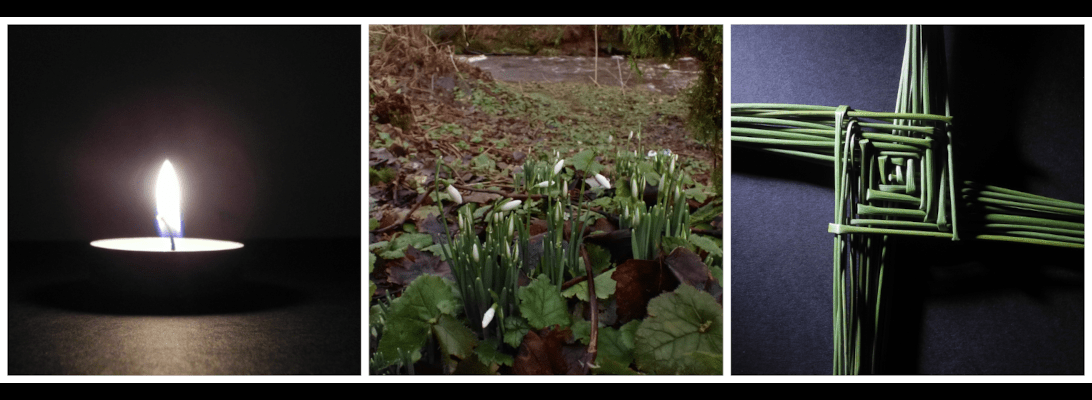
featuring three images showing a lighted candle, snowdrops, and brigid's cross made of reeds.

Imbolc falls on the first of February, half way between the winter solstice and the spring equinox. It is a pagan festival associated with the pagan goddess Brigid also known as Saint Bride by Christians.
The town of East Kilbride in Scotland, south of Glasgow has an association with Bride as Kilbride means the Church of Bride.
Lighting candles and making crosses were traditional ways to celebrate this day.
The festival celebrated increasing daylight, snowdrops, lambing, and anything to do with spring.
On my walk today, I noticed snowdrops for the first time at the riverside downstream of Castle Falls in Calderwood.

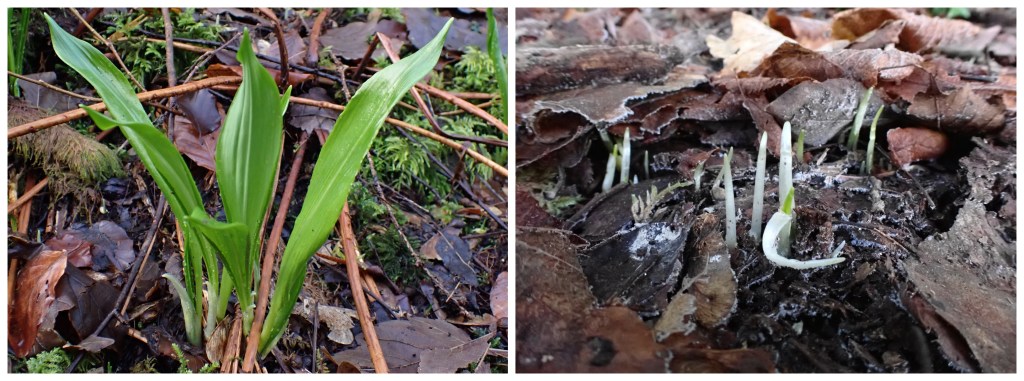
Two images showing garlic leaves and young shoots under leaf litter.


They grow more prolifically upstream at the Torrance House end of the Rotten Calder Gorge, where large drifts of them in the woods form quite an impressive sight.
Despite it still being very chilly, I noticed, while out on my walk, little shoots appearing from under the leaf litter, woodland plants ready to burst out and flower before the leaves of the trees come out and cast them into the shade.
Check out what looks like the leaves of wild garlic.
In this situation, they are well advanced, not wasting any time, taking advantage of the heat trapped in this sheltered and, particularly, sunny spot.
It may have just turned February, but spring is definitely around the corner.