We Are Making A difference

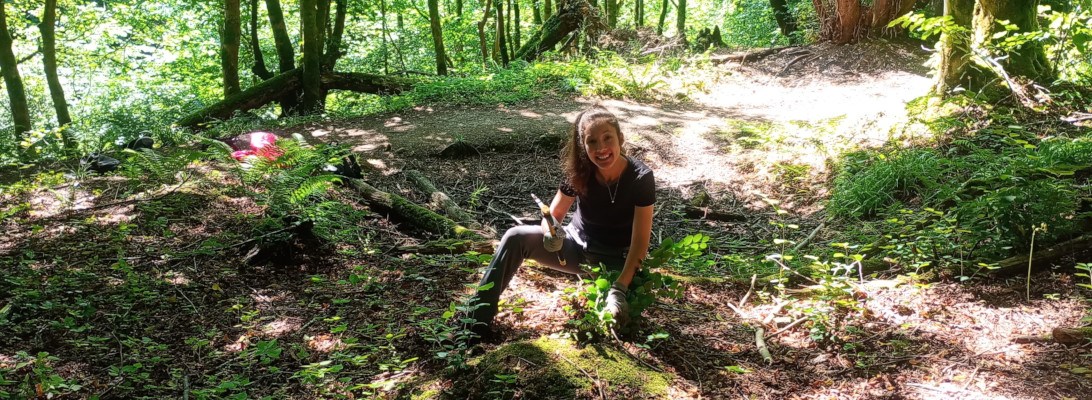
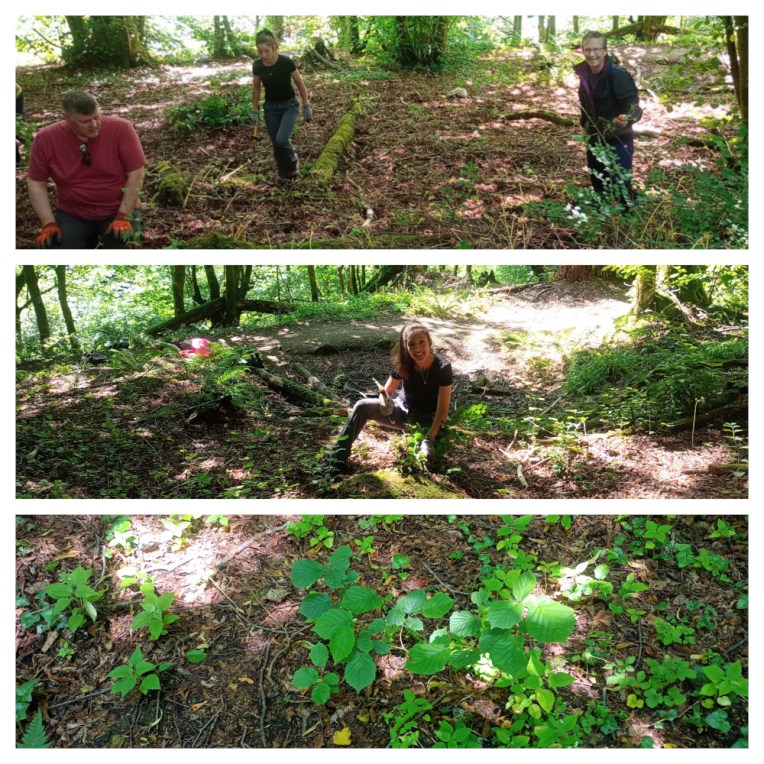
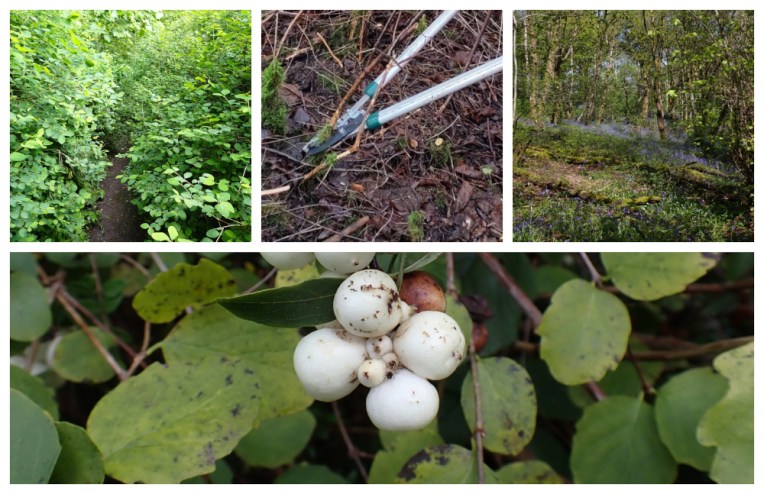
It has been hot, but we stayed cool by working under the trees, removing the small, persistent snowberry roots and shoots. It has taken many volunteer days to push the Snowberry back from the path and the bell pits in the area above Castle Falls. This is located at the Calderwood end of Calderglen Country Park. Over the summer, it has been rewarding to see young trees, bluebells, Enchanter’s Night Shade, and other native plants reclaim the woodland from the invasive non-native Snowberry. So, thanks to everyone who has contributed their time. We are making a difference

Also, thanks to South Lanarkshire Countryside Rangers for ongoing support and to TCV – The Conservation Volunteers for their grant, allowing the Calder Wood Volunteers to purchase the necessary tools to clear Snowberry from our local woodlands.
For more information, visit the Wild Projects page
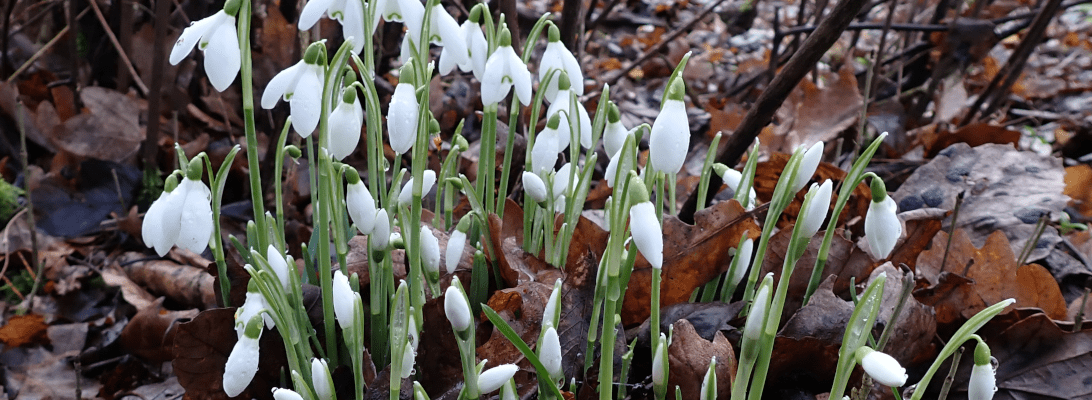
Snowdrops Brightening up a gloomy February Walk

a clump of snowdrops

The snowdrop is one of the first flowers to bloom, brightening the gloom of a February walk.

As wintery conditions are possible at this time of year, a protective sheath covering the tip of the flowering stem enables the flower to force its way up through the snow. But alternatively, should a warm spell occur, then these flowers provide an early feast for honeybees and early queen bees, who, in turn, pollinate the flowers.

Due to the uncertainty of the weather, snowdrops don’t rely on pollinators to reproduce as they spread mainly through bulb division.

Snowdrops have six white flower segments known as tepals arranged in two whorls. They are referred to as tepals, as there is a lack of distinction between sepals and petals.

The inner three tepals are smaller and have a notch in the tip with a green spot.

Flowering early in spring before the leaves on the trees emerge, casting the woodland into shade allows snowdrops to use the available light to grow, flower, and reproduce.

Although the bulbs are poisonous to eat, a naturally occurring compound in snowdrops called galantamine is now in use to treat the symptoms of Alzheimer’s disease.

I am attempting to keep a note of when plants come into flower and will post photographs and information in the wildflower diary project

An Orchard for the Community

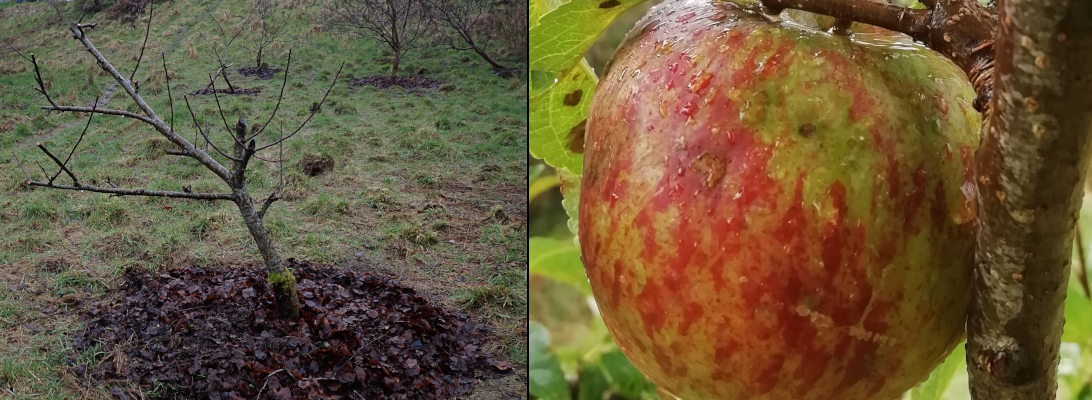
Apple trees planted several years ago in Calderwood as a Community Orchard have been getting lots of care this year, and I am pleased to say that the work has been worth it. We got a crop of good apples.
Initially, the orchard consisted of four apple trees and two plum trees, but in recent years, they appeared to be drowning in a sea of coarse grasses and were not looking too healthy.
To remedy this, Kirsten, who was initially involved in planting the orchard, decided to give the apple trees a good prune to reinvigorate them.
Then at the turn of the year, a group of us got together to tackle the coarse grass.
Each tree had the grass surrounding it dug up.
Then, each tree had brown cardboard placed under it.
On top of this was piled lots of leaf mold.
In late winter, there was a donation of four more trees.
After planting, each new tree had more cardboard placed around its base, with leaf litter piled on top.
As winter turned into spring, shoots appeared. Everything was looking good until we experienced acts of vandalism. Not by two-footed humans but by a four-footed variety. A deer was finding the young shoots of the new trees irresistible and using the more established trees as a scratching post.
Fortunately, the deer moved on, possibly as better weather appeared and more people were walking in the area.
When it came time to cut the grass to create walkways through the field, the grass cuttings were placed around each tree, acting as mulch for each tree.
What was interesting was the number of spiders, beetles, and ants that appeared to inhabit the grass around the base.
Hopefully, the orchard will now be more beneficial to people and wildlife.